
🥃 Costa del Greenock
Email newsletter originally sent to subscribers on 8 August 2024
If you haven’t yet managed to visit Speyburn Distillery, in Rothes, I would encourage you to find the time to do so. Not only does it give you a unique view of a wormtub (no spoilers here) but, having been built in 1897, there are still so many features of the distillery that give you a real sense of strolling back in time.
Such as these:
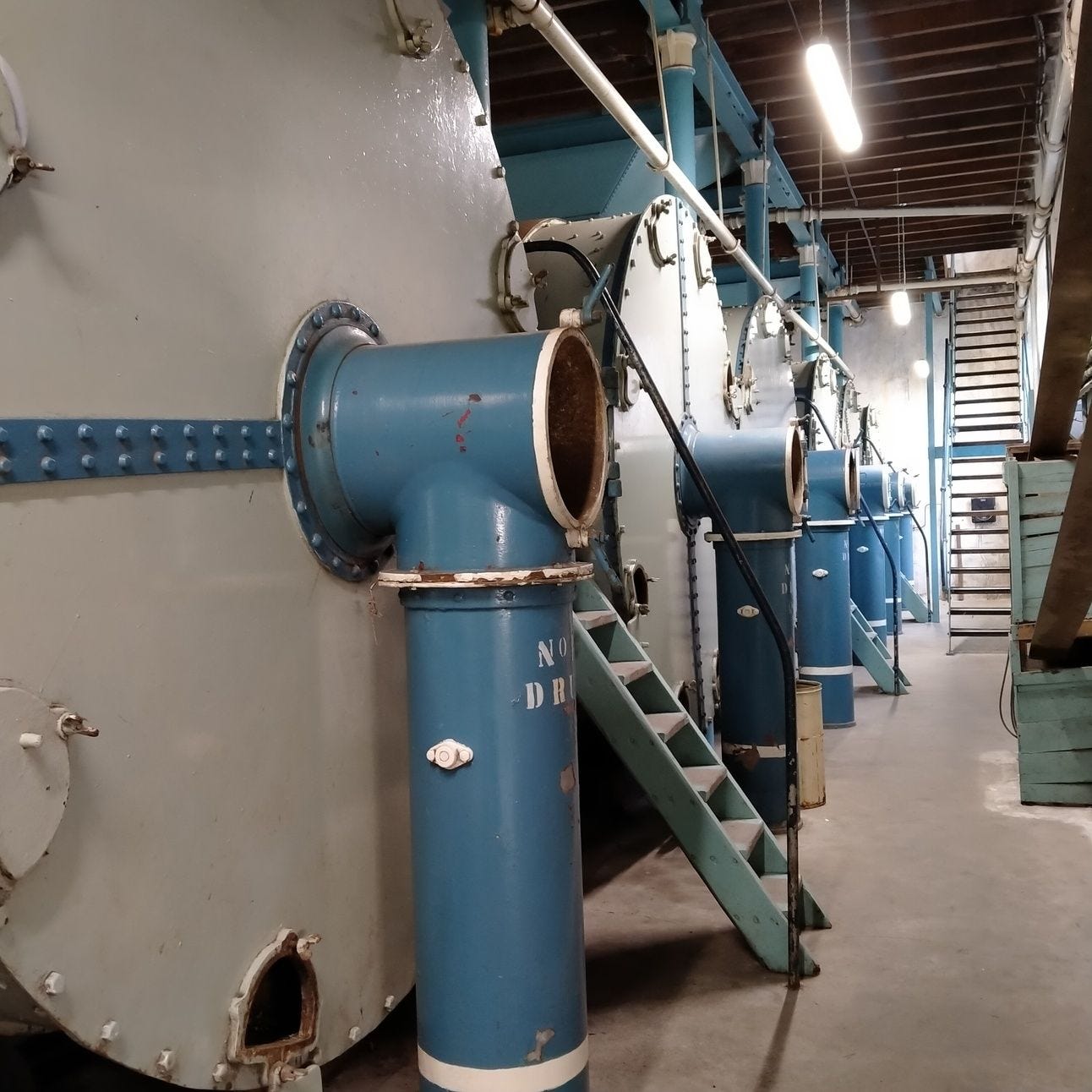
Malting drums - Speyburn Distillery
When the distillery was built, these malting drums were installed and were the next big thing. Quite literally; they’re huge.
Now, we know that these malting drums were pneumatic and had been invented by a bloke called Henning. But how do we know this? Because they were called Henning’s Pneumatic Drum Maltings, that’s why 😉
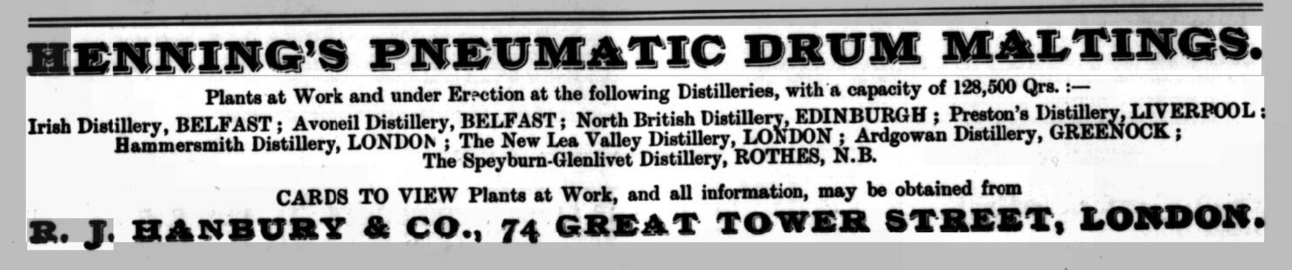
Distillers’, Brewers’ and Spirit Merchants’ Magazine - Dec 1897
It was claimed that these drum maltings could produce better malt, all year round; needed much less space than a malting floor; required less man power, and were easier, to operate; ensured greater control over malting quality and, probably most importantly at the time, saved money.
If you look closer at the above advertisement, you can see the other distilleries where these drum maltings were in place. Including one on the Costa del Greenock: Ardgowan Distillery.
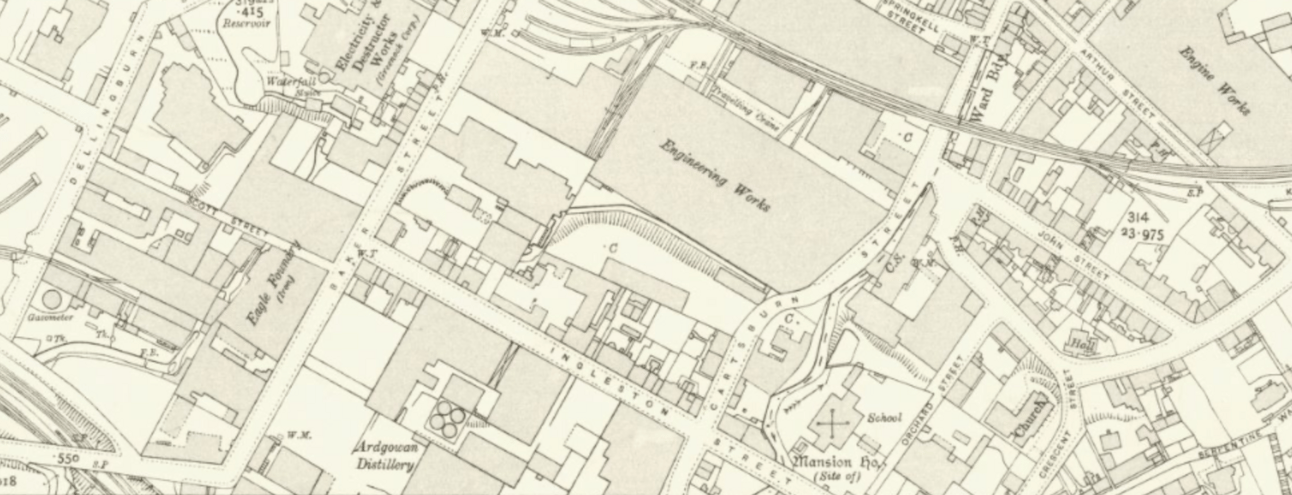
National Library of Scotland (the distillery is located at the bottom of the map)
There were many big players of the Scotch whisky trade involved in building Ardgowan Distillery. Names such as Alexander Walker, Adam Teacher and…I’m guessing you’ve probably worked out where this is going now… Robert and Walter Pattison.
With competition for whisky at an all time high, many blenders acquired, or built, their own distilleries as a way of securing stocks. This was the case with Ardgowan. A consortium, of sorts, of many prominent whisky merchants pooled together to construct this large grain distillery.
Building started in early 1897 and distilling began in July the following year (although not at full capacity as construction had still not yet been completed by then). There were 10 wash backs, each holding 40,000 gallons (about 182,000 litres for the metric amongst us - about a third of what North British’s 34 washbacks currently hold) and the Coffey still was able to deal with 8,000 gallons (about 36,000 litres) of wash per hour.
The Pattisons held 450 shares in the company when it was incorporated; just 50 less than Teacher and Walker each had.
After both Robert and Walter were declared bankrupt, their shares were gradually transferred to others. Ardgowan Distillery was later taken over by Distillers Company Ltd in 1902 and production there was subsequently closed down some 5 years or so later.
The Ardgowan Distillery name has since been resurrected, what with the new distillery at Inverkip currently under construction. The founders of the new Ardgowan Distillery, though, do not claim any association with the Pattison family 😁
Slàinte!
Justine